Medical Devices
UAE Physiotherapy Equipment Market Analysis
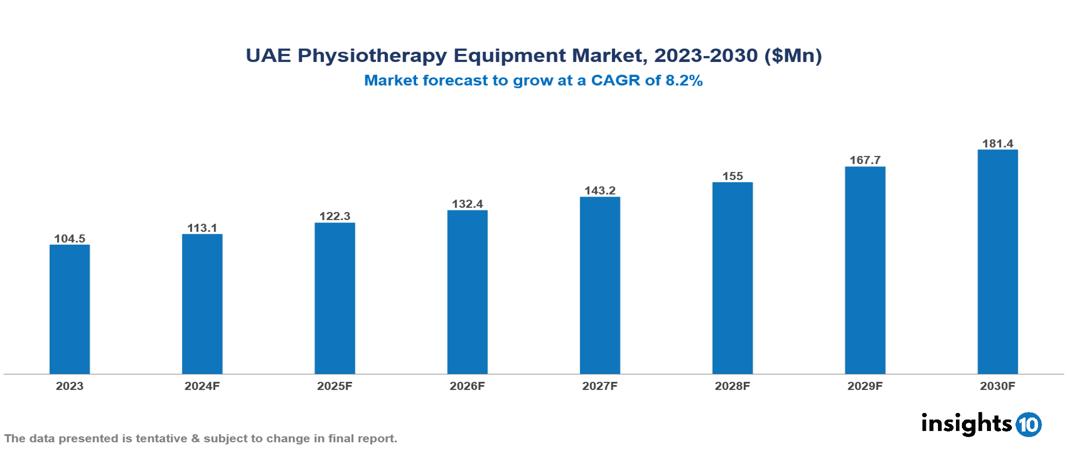
The UAE Physiotherapy Equipment Market was valued at $104.50 Mn in 2023 and is predicted to grow at a CAGR of 8.2% from 2023 to 2030, to $181.43 Mn by 2030. The key drivers of this industry include the rising prevalence of chronic diseases, expanding geriatric population, and advancements in technology. The key players in the industry are HMS Medical Systems, Medicaregt, EMS Physio Ltd., and Bionex Medical Equipment among others.
Buy Now

UAE Physiotherapy Equipment Market Executive Summary
The UAE Physiotherapy Equipment Market is at around $104.50 Mn in 2023 and is projected to reach $181.43 Mn in 2030, exhibiting a CAGR of 8.2% during the forecast period.
Physiotherapy equipment refers to the instruments that physiotherapists use to help cases recover from accidents, operations, or habitual conditions. These include exercise cycles, ultrasound machines, and resistance bands. The utilization of physiotherapy equipment can help reduce the level of care required for these patients. Musculoskeletal conditions encompass a wide range of conditions and conditions affecting the muscles, bones, joints, and connective tissues, leading to pain, mobility limitations, and reduced functioning. These conditions include low reverse pain, neck pain, fractures, osteoarthritis, amputations, rheumatoid arthritis, and other musculoskeletal issues. Musculoskeletal diseases affect limited mobility and are a significant cause of disability. Furthermore, the rising prevalence of neurological disorders in the population is the primary driver behind the increasing demand for neurology rehabilitation physiotherapy equipment. The most commonly utilized physiotherapy interventions for elderly individuals with neurological disorders include balance and gait training, occupational therapy, traditional physiotherapy techniques, walking and treadmill exercises, and upper limb robot-assisted therapy.
The market therefore is driven by significant factors like the aging population and the rising prevalence of cardiovascular, neurological, and musculoskeletal diseases. Advancements in technology, increasing healthcare spending, and government initiatives also play a key role in market growth. However, limited accessibility to specialized physiotherapists, high cost of physiotherapy equipment, and strict regulatory approval restrain the growth of the market.
The leading pharmaceutical companies include HMS Medical Systems and Bionex Medical Equipment for physiotherapy equipment. Medicaregt and EMS Physio Ltd. are also significant contributors to the physiotherapy equipment landscape, with continuous research and development activities.
Market Dynamics
Market Growth Drivers
Rise in Geriatric Population: In the UAE, approximately 16% of the population suffers from knee osteoarthritis. Given the array of health challenges among older adults, including cardiovascular issues, vision and hearing impairments, and diabetes, geriatric physiotherapy has become a critical area of focus. Manufacturers are investing significantly in advanced physiotherapy equipment to tackle these issues, anticipating a rise in age-related physical and psychological conditions in the future.
Government Initiatives: UAE's embrace of preventative healthcare, including physiotherapy, is driving the physiotherapy equipment market. Government programs are raising awareness and utilization of these services, leading to increased investment in physiotherapy facilities. This surge in demand creates a lucrative opportunity for manufacturers to supply cutting-edge equipment to the UAE's expanding physiotherapy landscape.
Increasing Healthcare Spending: UAE has a high healthcare spending rate, driven by increasing healthcare awareness and government initiatives, which has led to greater access to advanced physiotherapy equipment and services
Market Restraints
Lack of Skilled Physiotherapists: The shortage of skilled physiotherapists and healthcare providers hinders the implementation of sophisticated physiotherapy equipment due to patients' lack of access to proficient operators. Adoption of new technologies is restricted, particularly in remote locations.
High Cost of Physiotherapy Equipment: The high cost of physiotherapy equipment poses a significant challenge, especially for under-resourced areas with inadequate healthcare infrastructure.
Regulatory Obstacles: The process for medical devices can be lengthy and resource-intensive, potentially delaying the introduction of new physiotherapy equipment. This wait time restricts market growth by limiting the availability of innovative technologies for UAE physiotherapists and patients.
Regulatory Landscape and Reimbursement Scenario
The regulatory landscape for medical devices in the UAE is overseen by the Ministry of Health and Prevention (MoHAP). The Department of Registration and Drug Control (DCD) is responsible for ensuring the safety and efficacy of medical devices available in the country. The Medical Device Regulation (MDR) is a comprehensive regulation that covers all aspects of medical devices, from design and manufacturing to marketing and distribution. It aims to ensure the safety and efficacy of medical devices before they are approved for sale in the UAE market.
Public physiotherapy services are provided by government-funded hospitals and clinics, which are available to all citizens and residents. These services are typically free or low-cost and are covered by the government's universal healthcare system. Comprehensive health insurance plans typically cover physiotherapy consultations, while medium cover and basic plans do not. Private insurance providers may offer physiotherapy coverage as part of their plans. The coverage and costs vary depending on the provider and the specific plan
Competitive Landscape
Key Players
Here are some of the major key players in the UAE Physiotherapy Equipment Market:
- Bionex Medical Equipment
- HMS Medical Systems
- Koch Trading
- ITO Co. Ltd.
- Enraf-Nonius B.V.
- EMS Physio Ltd.
- OxyMed Medical & Laboratories Equipment Trading
- Medicaregt
- DJO Global
- Zynex Medical Inc.
1. Executive Summary
1.1 Device Overview
1.2 Global Scenario
1.3 Country Overview
1.4 Healthcare Scenario in Country
1.5 Regulatory Landscape for Medical Device
1.6 Health Insurance Coverage in Country
1.7 Type of Medical Device
1.8 Recent Developments in the Country
2. Market Size and Forecasting
2.1 Market Size (With Excel and Methodology)
2.2 Market Segmentation (Check all Segments in Segmentation Section)
3. Market Dynamics
3.1 Market Drivers
3.2 Market Restraints
4. Competitive Landscape
4.1 Major Market Share
4.2 Key Company Profile (Check all Companies in the Summary Section)
4.2.1 Company
4.2.1.1 Overview
4.2.1.2 Product Applications and Services
4.2.1.3 Recent Developments
4.2.1.4 Partnerships Ecosystem
4.2.1.5 Financials (Based on Availability)
5. Reimbursement Scenario
5.1 Reimbursement Regulation
5.2 Reimbursement Process for Diagnosis
5.3 Reimbursement Process for Treatment
6. Methodology and Scope
UAE Physiotherapy Equipment Market Segmentation
By Equipment
- Hydrotherapy
- Electrotherapy
- Cryotherapy
- Continuous Passive Motion Units
- Multi-exercise Therapy Unit
- Heat Therapy
- Shockwave Therapy
- Laser Therapy
- Traction Therapy
- Ultrasound
- Other Equipment Types
By Application
- Cardiovascular and Pulmonary
- Neurological
- Musculoskeletal
- Paediatric
- Other Applications
By End User
- Hospitals
- Physiotherapy & Rehabilitation Centers
- Home Care Settings
Methodology for Database Creation
Our database offers a comprehensive list of healthcare centers, meticulously curated to provide detailed information on a wide range of specialties and services. It includes top-tier hospitals, clinics, and diagnostic facilities across 30 countries and 24 specialties, ensuring users can find the healthcare services they need.
Additionally, we provide a comprehensive list of Key Opinion Leaders (KOLs) based on your requirements. Our curated list captures various crucial aspects of the KOLs, offering more than just general information. Whether you're looking to boost brand awareness, drive engagement, or launch a new product, our extensive list of KOLs ensures you have the right experts by your side. Covering 30 countries and 36 specialties, our database guarantees access to the best KOLs in the healthcare industry, supporting strategic decisions and enhancing your initiatives.
How Do We Get It?
Our database is created and maintained through a combination of secondary and primary research methodologies.
1. Secondary Research
With many years of experience in the healthcare field, we have our own rich proprietary data from various past projects. This historical data serves as the foundation for our database. Our continuous process of gathering data involves:
- Analyzing historical proprietary data collected from multiple projects.
- Regularly updating our existing data sets with new findings and trends.
- Ensuring data consistency and accuracy through rigorous validation processes.
With extensive experience in the field, we have developed a proprietary GenAI-based technology that is uniquely tailored to our organization. This advanced technology enables us to scan a wide array of relevant information sources across the internet. Our data-gathering process includes:
- Searching through academic conferences, published research, citations, and social media platforms
- Collecting and compiling diverse data to build a comprehensive and detailed database
- Continuously updating our database with new information to ensure its relevance and accuracy
2. Primary Research
To complement and validate our secondary data, we engage in primary research through local tie-ups and partnerships. This process involves:
- Collaborating with local healthcare providers, hospitals, and clinics to gather real-time data.
- Conducting surveys, interviews, and field studies to collect fresh data directly from the source.
- Continuously refreshing our database to ensure that the information remains current and reliable.
- Validating secondary data through cross-referencing with primary data to ensure accuracy and relevance.
Combining Secondary and Primary Research
By integrating both secondary and primary research methodologies, we ensure that our database is comprehensive, accurate, and up-to-date. The combined process involves:
- Merging historical data from secondary research with real-time data from primary research.
- Conducting thorough data validation and cleansing to remove inconsistencies and errors.
- Organizing data into a structured format that is easily accessible and usable for various applications.
- Continuously monitoring and updating the database to reflect the latest developments and trends in the healthcare field.
Through this meticulous process, we create a final database tailored to each region and domain within the healthcare industry. This approach ensures that our clients receive reliable and relevant data, empowering them to make informed decisions and drive innovation in their respective fields.
To request a free sample copy of this report, please complete the form below.
We value your inquiry and offer free customization with every report to fulfil your exact research needs.

Related reports (by category)
Medical Devices
Sweden Contraceptive Devices Market Analysis
Medical Devices
Canada Cardiac Monitoring Devices Market Analysis
Medical Devices
Singapore Contact Lenses Market Analysis
Related reports (by geography)
Pharmaceuticals
UAE Gastroesophageal Reflux Disease (GERD) Drugs Market Analysis
Healthcare Services
UAE Healthcare Diagnostics Market Analysis
Healthcare Services
UAE Cardiovascular Diagnostic Testing Market Analysis
Pharmaceuticals