Pharmaceuticals
Spain Retail Pharmacy Market Analysis
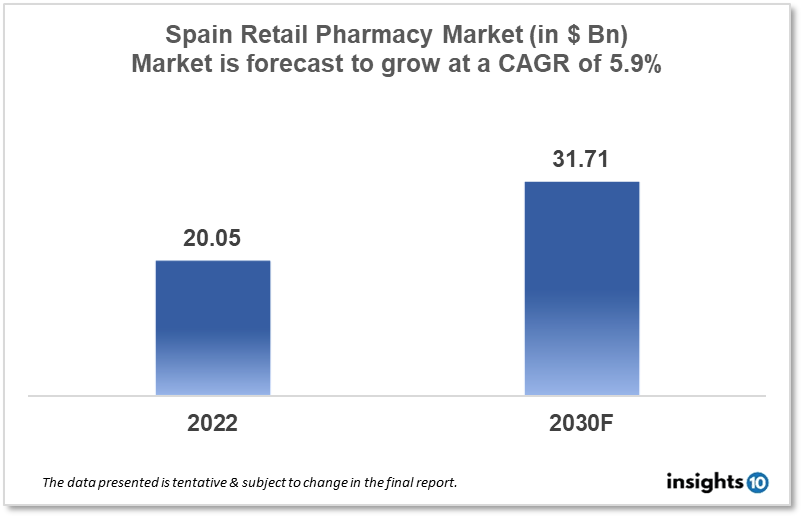
Spain's retail pharmacy market is projected to grow from $20.05 Bn in 2022 to $31.70 Bn by 2030, registering a CAGR of 5.9% during the forecast period of 2022-2030. The retail pharmacy market in Spain is a well-established market, with over 24,000 pharmacies operating in the country. Farmacias Ahorro is a top retail pharmacy chain in Spain with more than 1,000 stores in the country.
Buy Now

Spain Retail Pharmacy Market Executive Summary
Spain's retail pharmacy market is projected to grow from $20.05 Bn in 2022 to $31.70 Bn by 2030, registering a CAGR of 5.9% during the forecast period of 2022-30.
The retail pharmacy market in Spain is a well-established market, with over 24,000 pharmacies operating in the country. The market is primarily composed of independent pharmacies, which account for the majority of the total market share. Spain has a large number of small pharmacies, which are typically family-owned and operated.
The Spanish government plays a significant role in the retail pharmacy market through its reimbursement policies and regulations. The government sets the prices of drugs and sets reimbursement rates for pharmacies, which can impact their profitability. The government also regulates the number of pharmacies that can operate in a given area to ensure fair competition among pharmacies and prevent oversupply.
The Spanish healthcare system is based on a statutory health insurance system, which is funded by social security contributions and taxes. This system regulates the prices of drugs and the reimbursement rates for pharmacies. The Spanish Institute of Health Carlos III (ISCIII) sets the prices of drugs and the reimbursement rates for pharmacies, which can impact their profitability.
In recent years, there have been some challenges in the market, such as the increasing number of international and online pharmacies entering the Spanish market, which is increasing competition and driving down prices. Additionally, the retail pharmacy market in Spain is highly consolidated, with a few large companies dominating the market, which can limit the opportunities for small and independent pharmacies to succeed.
Overall, the retail pharmacy market in Spain is a well-established market, with a strong presence of independent pharmacies. The government plays a significant role in the market through its reimbursement policies and regulations, which can impact the profitability of pharmacies.
Market Dynamics
Market Drivers
The key drivers of the Spain retail pharmacy market include an aging population, increased demand for prescription drugs, and government regulations.
- Aging population: Spain has an aging population, which is leading to a higher demand for prescription drugs and over-the-counter (OTC) products, which is driving the growth of the retail pharmacy market
- Increased demand for prescription drugs: The growing prevalence of chronic diseases such as diabetes, heart disease, and cancer is driving an increase in the demand for prescription drugs in Spain
- Government regulations: The Spanish government plays a significant role in the retail pharmacy market through its reimbursement policies and regulations. The government sets the prices of drugs and sets reimbursement rates for pharmacies, which can impact their profitability
- Healthcare system: The Spanish healthcare system is based on a statutory health insurance system, which is funded by social security contributions and taxes. This system regulates the prices of drugs and the reimbursement rates for pharmacies, which can impact their profitability
- Technological advancements: Advancements in technology such as telemedicine and online consultations have made it easier for patients to access healthcare services and medicines, which is driving the growth of the retail pharmacy market
- Increasing adoption of E-Pharmacies: The growing trend of e-pharmacies and home delivery services in Spain is expected to further drive the growth of the retail pharmacy market.
Overall, the aging population, the increasing demand for prescription drugs, government regulations and reimbursement policies, the healthcare system, and technological advancements are the key drivers of the Spain retail pharmacy market.
Competitive Landscape
Key Players
The key players in the Spain retail pharmacy market include:
- Farmacias Ahorro: It is a retail pharmacy chain with more than 1,000 stores in Spain
- Farmacias Guada: It is a retail pharmacy chain with more than 800 stores in Spain
- Farmacias Trebol: It is a retail pharmacy chain with more than 700 stores in Spain
- Farmacias San Pablo: It is a retail pharmacy chain with more than 600 stores in Spain
- Farmacias Cruz Verde: It is a retail pharmacy chain with more than 500 stores in Spain
- Farmacias Similares: It is a retail pharmacy chain with more than 400 stores in Spain
- Farmacias El Amparo: It is a retail pharmacy chain with more than 300 stores in Spain
- Farmacias del Dr. Ahorro: It is a retail pharmacy chain with more than 200 stores in Spain
- Farmacias Benavides: It is a retail pharmacy chain with more than 200 stores in Spain
These companies are considered the main players in the Spain retail pharmacy market with a strong brand image and an extensive network of stores across the country. They continuously innovate, adapt, and expand their service offerings to cater to the changing customer needs and stay competitive in the market. However, the retail pharmacy market in Spain is highly consolidated with a few large companies dominating the market, which can limit the opportunities for small and independent pharmacies to succeed.
Healthcare Policies and Regulatory Landscape
The healthcare policies and regulatory landscape in Spain play a significant role in the retail pharmacy market. The Spanish healthcare system is based on a statutory health insurance system, which is funded by social security contributions and taxes. This system regulates the prices of drugs and the reimbursement rates for pharmacies.
The Spanish Institute of Health Carlos III (ISCIII) is responsible for setting the reimbursement rates for drugs in Spain. The ISCIII also determines which drugs are eligible for reimbursement and at what price. This can have a significant impact on the profitability of pharmacies, as they are only reimbursed a set amount for each drug they sell.
The Spanish government also regulates the number of pharmacies that can operate in a given area to ensure fair competition among pharmacies and to prevent oversupply. The Spanish Pharmacies Act (Law 29/2006, of July 26, 2006) is the main legislation that regulates the operations of pharmacies in Spain. It sets out the requirements for opening and operating a pharmacy, including the qualifications and training required for pharmacists.
The Spanish government also regulates the prices of drugs in the market through the Spanish Institute of Health Carlos III (ISCIII). This institution is responsible for setting the prices of drugs and determining which drugs are eligible for reimbursement and at what price.
In addition, the Spanish National Association of Pharmacies (Federación Nacional de Asociaciones de Farmacéuticos) is a professional organization that represents the interests of pharmacists in Spain. It works closely with the government and other stakeholders to develop and implement policies that promote the development and availability of new drugs in the market.
In summary, the Spanish healthcare system, the Spanish Institute of Health Carlos III, the Spanish Pharmacies Act, and the Spanish National Association of Pharmacies play a crucial role in regulating the retail pharmacy market in Spain. These regulations and policies can impact the profitability of pharmacies and the availability of drugs in the market.
1. Executive Summary
1.1 Disease Overview
1.2 Global Scenario
1.3 Country Overview
1.4 Healthcare Scenario in Country
1.5 Patient Journey
1.6 Health Insurance Coverage in Country
1.7 Active Pharmaceutical Ingredient (API)
1.8 Recent Developments in the Country
2. Market Size and Forecasting
2.1 Epidemiology of Disease
2.2 Market Size (With Excel & Methodology)
2.3 Market Segmentation (Check all Segments in Segmentation Section)
3. Market Dynamics
3.1 Market Drivers
3.2 Market Restraints
4. Competitive Landscape
4.1 Major Market Share
4.2 Key Company Profile (Check all Companies in the Summary Section)
4.2.1 Company
4.2.1.1 Overview
4.2.1.2 Product Applications and Services
4.2.1.3 Recent Developments
4.2.1.4 Partnerships Ecosystem
4.2.1.5 Financials (Based on Availability)
5. Reimbursement Scenario
5.1 Reimbursement Regulation
5.2 Reimbursement Process for Diagnosis
5.3 Reimbursement Process for Treatment
6. Methodology and Scope
Retail Pharmacy Market Segmentation
Pharmacy Product
It mainly includes Pharmaceutical products and it provides information for medical treatments.
- Prescription
- OTC
Pharmacy Type
- Hospital Pharmacy
- Retail Pharmacy
- Chain
- Independent
- Others
- ePharmacy
- Others
Methodology for Database Creation
Our database offers a comprehensive list of healthcare centers, meticulously curated to provide detailed information on a wide range of specialties and services. It includes top-tier hospitals, clinics, and diagnostic facilities across 30 countries and 24 specialties, ensuring users can find the healthcare services they need.
Additionally, we provide a comprehensive list of Key Opinion Leaders (KOLs) based on your requirements. Our curated list captures various crucial aspects of the KOLs, offering more than just general information. Whether you're looking to boost brand awareness, drive engagement, or launch a new product, our extensive list of KOLs ensures you have the right experts by your side. Covering 30 countries and 36 specialties, our database guarantees access to the best KOLs in the healthcare industry, supporting strategic decisions and enhancing your initiatives.
How Do We Get It?
Our database is created and maintained through a combination of secondary and primary research methodologies.
1. Secondary Research
With many years of experience in the healthcare field, we have our own rich proprietary data from various past projects. This historical data serves as the foundation for our database. Our continuous process of gathering data involves:
- Analyzing historical proprietary data collected from multiple projects.
- Regularly updating our existing data sets with new findings and trends.
- Ensuring data consistency and accuracy through rigorous validation processes.
With extensive experience in the field, we have developed a proprietary GenAI-based technology that is uniquely tailored to our organization. This advanced technology enables us to scan a wide array of relevant information sources across the internet. Our data-gathering process includes:
- Searching through academic conferences, published research, citations, and social media platforms
- Collecting and compiling diverse data to build a comprehensive and detailed database
- Continuously updating our database with new information to ensure its relevance and accuracy
2. Primary Research
To complement and validate our secondary data, we engage in primary research through local tie-ups and partnerships. This process involves:
- Collaborating with local healthcare providers, hospitals, and clinics to gather real-time data.
- Conducting surveys, interviews, and field studies to collect fresh data directly from the source.
- Continuously refreshing our database to ensure that the information remains current and reliable.
- Validating secondary data through cross-referencing with primary data to ensure accuracy and relevance.
Combining Secondary and Primary Research
By integrating both secondary and primary research methodologies, we ensure that our database is comprehensive, accurate, and up-to-date. The combined process involves:
- Merging historical data from secondary research with real-time data from primary research.
- Conducting thorough data validation and cleansing to remove inconsistencies and errors.
- Organizing data into a structured format that is easily accessible and usable for various applications.
- Continuously monitoring and updating the database to reflect the latest developments and trends in the healthcare field.
Through this meticulous process, we create a final database tailored to each region and domain within the healthcare industry. This approach ensures that our clients receive reliable and relevant data, empowering them to make informed decisions and drive innovation in their respective fields.
To request a free sample copy of this report, please complete the form below.
We value your inquiry and offer free customization with every report to fulfil your exact research needs.

Related reports (by category)
Pharmaceuticals
UAE Orphan Diseases Drugs Market Analysis
Pharmaceuticals
Singapore Blood Group Typing Market Analysis
Pharmaceuticals
Japan Addiction Therapeutics Market Analysis
Related reports (by geography)
Rare Diseases
Spain Colorectal Cancer Drugs Market Analysis
Pharmaceuticals
Spain Alzheimer’s Disease Drugs Market Analysis
Rare Diseases
Spain Uveitis Therapeutics Market Analysis
Rare Diseases