Pharmaceuticals
Malaysia Anemia Therapeutics Market Analysis
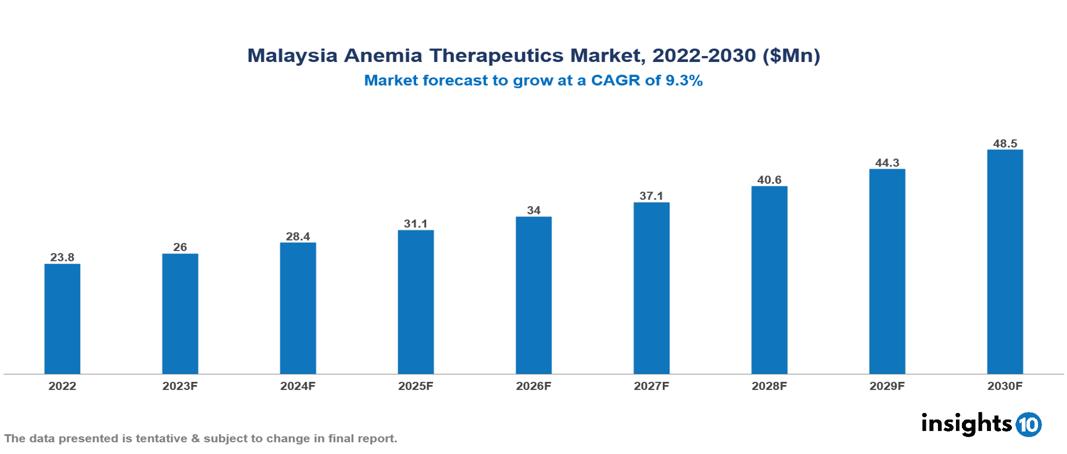
The Malaysia Anemia Therapeutics Market is anticipated to experience a growth from $24 Mn in 2022 to $48 Mn by 2030, with a CAGR of 9.3% during the forecast period of 2022-2030. The government's deliberate focus on maternal and child health initiatives that address iron deficiency anemia, as well as the creation of business opportunities, treatment demand, and the expansion of healthcare coverage to improve treatment accessibility, are the main factors driving the Malaysian market. The Malaysia Anemia Therapeutics Market encompasses various players across different segments, including Novartis, Roche, Pfizer, Johnson & Johnson, AbbVie, Duopharma, Pharmaniaga, Mead Johnson Malaysia, Baxter International, Fresenius Medical Care, etc, among various others.
Buy Now

Malaysia Anemia Therapeutics Market Analysis Executive Summary
The Malaysia Anemia Therapeutics Market is anticipated to experience growth from $24 Mn in 2022 to $48 Mn by 2030, with a CAGR of 9.3% during the forecast period of 2022-2030.
Anemia arises due to an insufficient quantity of red blood cells or hemoglobin in the bloodstream, leading to symptoms like fatigue, weakness, and shortness of breath. The most prevalent form is Iron-Deficiency Anemia (IDA), while less common types include aplastic anemia, sideroblastic anemia, and megaloblastic anemia. Aplastic anemia, a severe condition resulting in inadequate production of new blood cells, can be addressed with medications, stem cell transplants, and blood transfusions. Sideroblastic anemia and megaloblastic anemia can be managed with supplemental vitamins B9 and B12. For IDA, iron supplements are commonly prescribed to replenish depleted iron levels in the body. Erythropoiesis-stimulating agents (ESAs), such as erythropoietin, may be used to stimulate the production of red blood cells in certain types of anemia. In cases of aplastic anemia, immunosuppressive drugs like anti-thymocyte globulin (ATG) and cyclosporine may be employed to suppress the immune system's attack on bone marrow cells. It is essential to tailor treatments to the specific type and severity of the condition for optimal patient outcomes.
In Malaysia, the prevalence of anemia varies largely by population group. Anemia is present in 24.6% of people overall, with women having higher rates (35.5%) than males (14.3%). The risk of anemia can also be influenced by access to healthcare, income, and education. IDA is the most frequent cause, frequently brought on by dietary deficiencies and insufficient consumption of foods high in iron. The government's deliberate focus on maternal and child health initiatives that address iron deficiency anemia, as well as the creation of business opportunities, treatment demand, and the expansion of healthcare coverage to improve treatment accessibility, are the main factors driving the Malaysian market.
With their well-known brands and robust sales of iron supplements and ESAs, Novartis, and Duopharma command a large share of the Malaysian anemia industry. On the other hand, internet pharmacies are upending distribution, local generics are providing less expensive options, and Baxter's Caelyx is becoming more popular in extreme situations. Future developments in HIF-PHI inhibitors might further upend the industry.
Market Dynamics
Market Growth Drivers
Emphasis on Maternal and Child Health: Initiatives to treat iron deficiency anemia, encourage the use of iron supplements, and promote dietary interventions are common components of government programs meant to improve mother and child health. This emphasis on disadvantaged populations opens doors for businesses that meet particular requirements, such as Mead Johnson, which offers newborn formula supplemented with iron.
Growing Healthcare Needs of Aging Population: Chronic disorders, including diabetes and chronic kidney disease (CKD), which are significant causes of anemia, are becoming more common in Malaysia as a result of the country's rapidly aging population. Companies like Novartis and Roche have a lot of room to grow given the increase in demand for anemia treatment alternatives, especially ESAs for patients with CKD.
Government Policies and Reimbursement Plans: Promoting the use of generic drugs and extending healthcare coverage are two ways that the Malaysian government is using to improve treatment accessibility and cost, especially for lower-class populations. This might encourage market expansion and help both established and up-and-coming local generic producers.
Market Restraints
Affordability and Pricing: Due to their high cost, many people cannot afford to use newer oral and intravenous iron formulations, erythropoietin-stimulating agents (ESAs), or gene therapy options. This is especially true for those who depend on public healthcare or have limited insurance coverage. Treatments for anemia, particularly those involving more recent medications, may not always be fully covered by public healthcare. Patients now have out-of-pocket costs, which further reduces affordability.
Challenges with Awareness and Diagnosis: Although anemia is common in Malaysia, particularly in children and pregnant women, little is known about its causes, symptoms, and available treatments. As a result, diagnosis and treatment of anemia are often delayed. Certain places may have restricted access to sophisticated diagnostic techniques like ferritin levels and genetic testing, which might impede precise diagnosis and focused therapy.
Substandard and Counterfeit Drugs: The distribution of substandard or counterfeit anemia drugs can compromise treatment efficacy and present safety concerns, which can damage patient confidence in recently developed therapies and hinder market expansion.
Healthcare Policies and Regulatory Landscape
In Malaysia, healthcare policies are intricately designed to guarantee the provision of accessible, cost-effective, and high-caliber healthcare services for the populace. The Ministry of Health (MOH) assumes a central role in crafting and executing these policies, emphasizing the significance of universal health coverage and impartial access to medical services. The National Pharmaceutical Regulatory Agency (NPRA), operating under the MOH's jurisdiction, stands as a vital element within Malaysia's healthcare framework. NPRA is tasked with overseeing pharmaceuticals, biological products, and traditional medicines to ensure their safety, effectiveness, and quality. Its responsibilities encompass the approval, registration, and ongoing monitoring of medicines and healthcare products in the nation. NPRA's functions extend beyond mere regulatory supervision; it actively participates in pharmacovigilance efforts, scrutinizing adverse drug reactions, and perpetually evaluating the safety profiles of medications. The agency collaborates with international regulatory bodies, staying abreast of global best practices and contributing to Malaysia's dedication to maintaining a resilient and efficient healthcare system.
Competitive Landscape
Key Players:
- Novartis
- Roche
- Pfizer
- Johnson & Johnson
- AbbVie
- Duopharma Biotech
- Pharmaniaga
- Mead Johnson Malaysia
- Baxter International
- Fresenius Medical Care
1. Executive Summary
1.1 Disease Overview
1.2 Global Scenario
1.3 Country Overview
1.4 Healthcare Scenario in Country
1.5 Patient Journey
1.6 Health Insurance Coverage in Country
1.7 Active Pharmaceutical Ingredient (API)
1.8 Recent Developments in the Country
2. Market Size and Forecasting
2.1 Epidemiology of Disease
2.2 Market Size (With Excel & Methodology)
2.3 Market Segmentation (Check all Segments in Segmentation Section)
3. Market Dynamics
3.1 Market Drivers
3.2 Market Restraints
4. Competitive Landscape
4.1 Major Market Share
4.2 Key Company Profile (Check all Companies in the Summary Section)
4.2.1 Company
4.2.1.1 Overview
4.2.1.2 Product Applications and Services
4.2.1.3 Recent Developments
4.2.1.4 Partnerships Ecosystem
4.2.1.5 Financials (Based on Availability)
5. Reimbursement Scenario
5.1 Reimbursement Regulation
5.2 Reimbursement Process for Diagnosis
5.3 Reimbursement Process for Treatment
6. Methodology and Scope
Malaysia Anemia Therapeutics Market Segmentation
By Type of Disease
- Iron Deficiency Anemia
- Megaloblastic Anemia
- Pernicious Anemia
- Hemorrhagic Anemia
- Hemolytic Anemia
- Sickle Cell Anemia
By Population
- Pediatrics
- Adults
- Geriatrics
By Therapy Type
- Oral Iron Therapy
- Parenteral Iron Therapy
- Red Blood Cell Transplantation
- Others
By Distribution Channel
- Hospital Pharmacies
- Drug Stores & Retail Pharmacies
- Online Pharmacies
By End User
- In-Patient Centres
- Out-Patient Speciality Clinics
- Homecare
- Others
Methodology for Database Creation
Our database offers a comprehensive list of healthcare centers, meticulously curated to provide detailed information on a wide range of specialties and services. It includes top-tier hospitals, clinics, and diagnostic facilities across 30 countries and 24 specialties, ensuring users can find the healthcare services they need.
Additionally, we provide a comprehensive list of Key Opinion Leaders (KOLs) based on your requirements. Our curated list captures various crucial aspects of the KOLs, offering more than just general information. Whether you're looking to boost brand awareness, drive engagement, or launch a new product, our extensive list of KOLs ensures you have the right experts by your side. Covering 30 countries and 36 specialties, our database guarantees access to the best KOLs in the healthcare industry, supporting strategic decisions and enhancing your initiatives.
How Do We Get It?
Our database is created and maintained through a combination of secondary and primary research methodologies.
1. Secondary Research
With many years of experience in the healthcare field, we have our own rich proprietary data from various past projects. This historical data serves as the foundation for our database. Our continuous process of gathering data involves:
- Analyzing historical proprietary data collected from multiple projects.
- Regularly updating our existing data sets with new findings and trends.
- Ensuring data consistency and accuracy through rigorous validation processes.
With extensive experience in the field, we have developed a proprietary GenAI-based technology that is uniquely tailored to our organization. This advanced technology enables us to scan a wide array of relevant information sources across the internet. Our data-gathering process includes:
- Searching through academic conferences, published research, citations, and social media platforms
- Collecting and compiling diverse data to build a comprehensive and detailed database
- Continuously updating our database with new information to ensure its relevance and accuracy
2. Primary Research
To complement and validate our secondary data, we engage in primary research through local tie-ups and partnerships. This process involves:
- Collaborating with local healthcare providers, hospitals, and clinics to gather real-time data.
- Conducting surveys, interviews, and field studies to collect fresh data directly from the source.
- Continuously refreshing our database to ensure that the information remains current and reliable.
- Validating secondary data through cross-referencing with primary data to ensure accuracy and relevance.
Combining Secondary and Primary Research
By integrating both secondary and primary research methodologies, we ensure that our database is comprehensive, accurate, and up-to-date. The combined process involves:
- Merging historical data from secondary research with real-time data from primary research.
- Conducting thorough data validation and cleansing to remove inconsistencies and errors.
- Organizing data into a structured format that is easily accessible and usable for various applications.
- Continuously monitoring and updating the database to reflect the latest developments and trends in the healthcare field.
Through this meticulous process, we create a final database tailored to each region and domain within the healthcare industry. This approach ensures that our clients receive reliable and relevant data, empowering them to make informed decisions and drive innovation in their respective fields.
To request a free sample copy of this report, please complete the form below.
We value your inquiry and offer free customization with every report to fulfil your exact research needs.

Related reports (by category)
Pharmaceuticals
China Obesity Drugs Market Analysis
Pharmaceuticals
Vietnam Anti-Venom Market Analysis
Pharmaceuticals
Singapore Bone Marrow Aspirate Concentrates Market Analysis
Related reports (by geography)
Pharmaceuticals
Malaysia Varicella Vaccine Market Analysis
Medical Devices
Malaysia Pain Management Devices Market Analysis
Clinical Trials